


+971 4-875-8700
How we received real estate leads at AED 39 with a 57% qualification rate
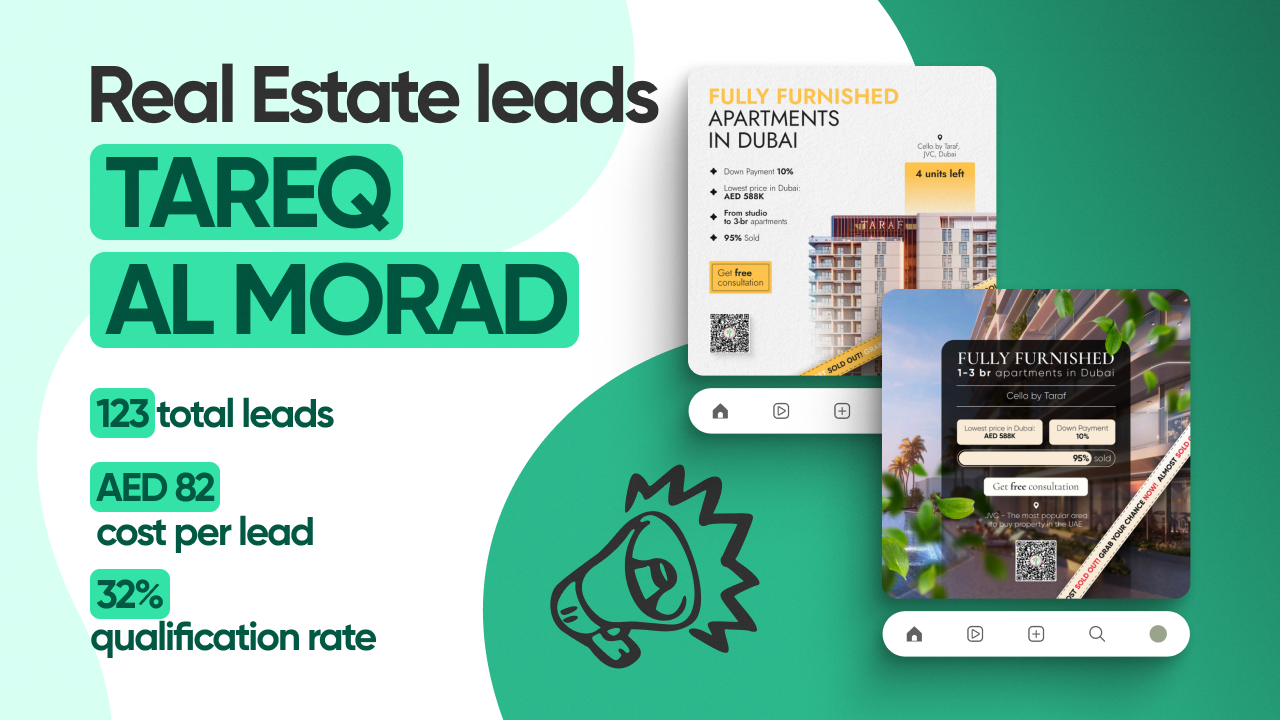
Tareq is a real estate broker in the UAE. In three months we turned a costly, low-quality lead flow into a steady stream of qualified buyers and higher-budget investors — through smarter project selection, sharper creatives and a lookalike audience of Dubai investors.
3 months
prospects
qualification
Meet Tareq
Tareq is a real estate broker in the UAE property market. The goal was clear: more qualified leads from people who are genuinely ready to buy or invest — not just more form submissions.
We promoted apartments with accessible starting prices and strong capital-appreciation potential, and later shifted focus to investors ready to commit more than AED 2 million.
Not more leads — the right leads
The task was never just volume. We had to reach people genuinely interested in buying property — and later, investors with serious budgets. Each problem got its own answer.
Low lead quality
In month one we received 16 leads at an average of AED 168, and only a third were qualified. Many prospects wanted 2–3 bedroom apartments or villas, while the ads promoted more affordable units.
Affordable projects + data-driven targeting
We focused the ads on apartments with a lower entry price, then used first-month data to narrow the audience to 30–65-year-olds interested in real estate investing and rebuilt the creatives around fully furnished units and affordable terms.
Investors with bigger budgets
Next, we needed more investors ready to spend above AED 2M — a narrower, harder-to-reach audience.
Lookalike audience of Dubai investors
Instead of relying on interests alone, we modelled the audience on a database of Dubai investors — people already active in the property market and ready for bigger budgets.
Four steps from AED 168 to AED 39
Lead generation strategy
Project selection, first teasers and a simple in-app lead form.
Lead quality problem
First month benchmark and audience diagnosis.
Quality over volume
New creatives plus a refined 30–65 audience.
Scaling to investors
Lookalike audience built on Dubai investors.
Building the initial lead generation strategy
Project-selection strategy
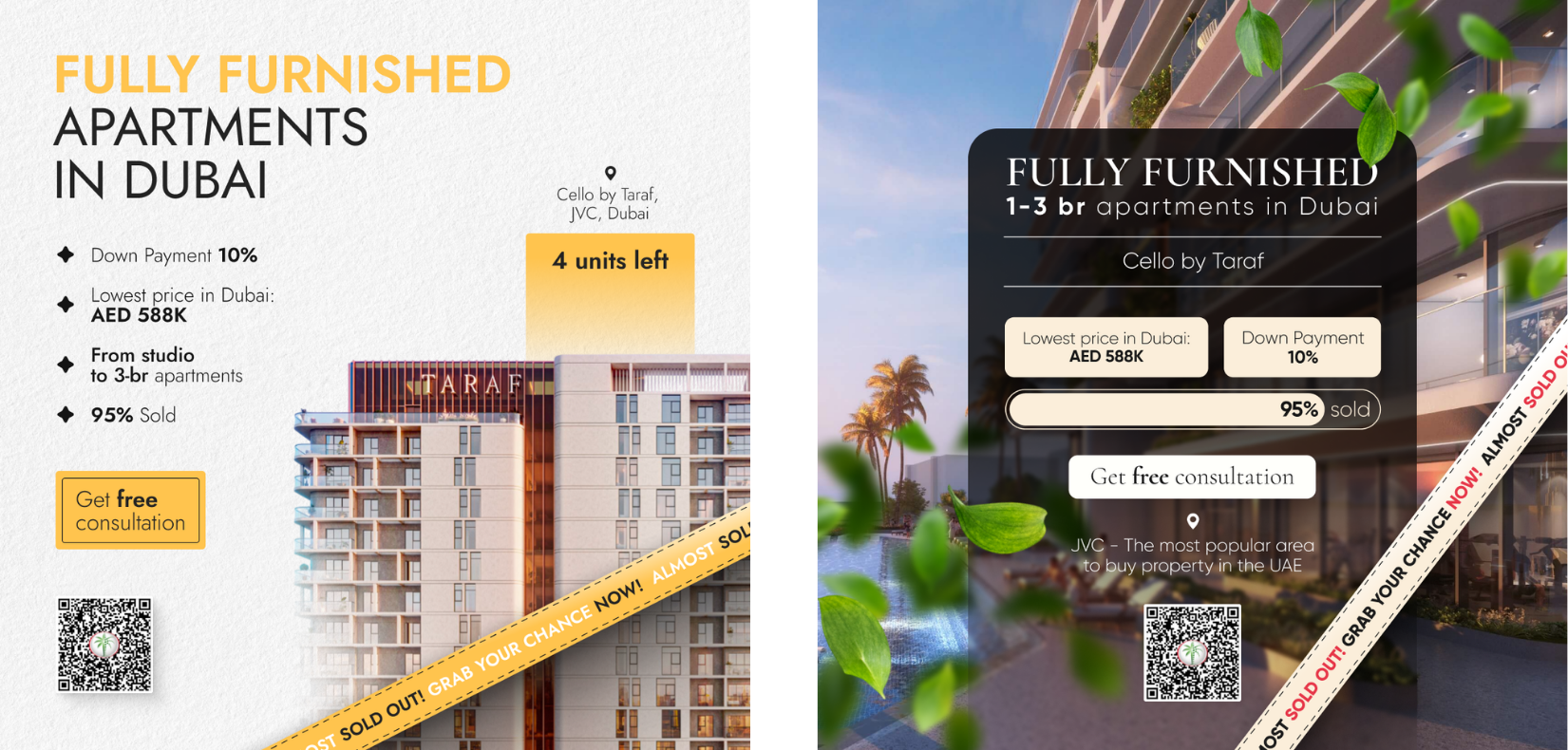
Instead of advertising every property available, we agreed with the client on what to promote: apartments with a lower starting price and strong capital-appreciation potential. We deliberately moved away from expensive villas — a more accessible entry point attracts a broader pool of investors. The client then supplied matching projects, which became the foundation of the campaigns.
 Project selection
Affordability and scarcity
The first teasers led with the most accessible projects. Rather than selling luxury, we gave practical reasons to act: a lower entry point, affordable payment options and limited availability — keeping the message investment-focused while making the property feel attainable.
 Ad teasers
Scarcity message
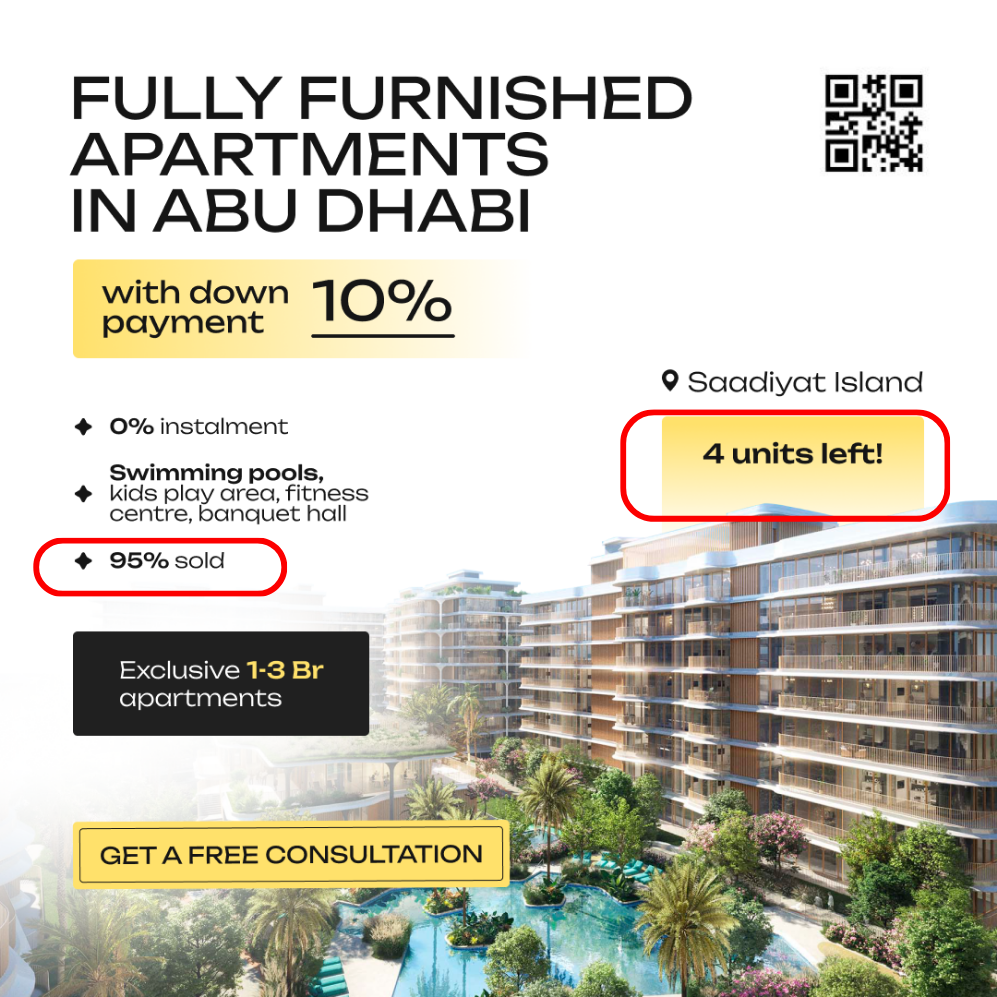
We amplified urgency by showing how few units were left. The number of remaining units in the creative was adjusted to strengthen the feeling of scarcity — nudging buyers to act now instead of postponing the decision.
- Down payment 10%
- Lowest entry price in the area
- Flexible payment plan
One-tap lead form
We used an in-app lead form, so prospects never had to leave Facebook or Instagram. They left their details and picked how to continue the conversation — removing every unnecessary step between seeing the ad and becoming a lead.
First results revealed a lead quality problem
First-month performance
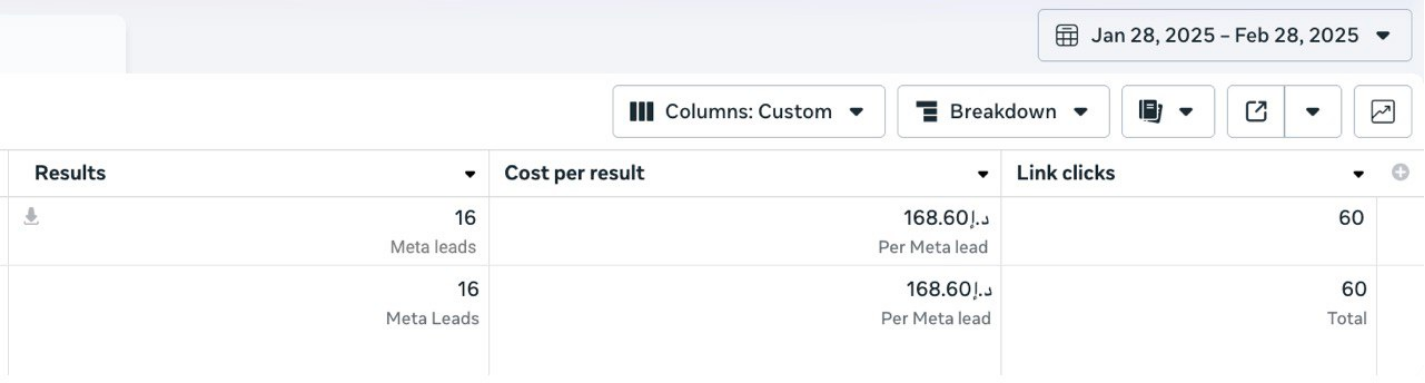
The first month brought 16 leads at an average of AED 168. We treated it as a benchmark, not a final setup: the cost was still high, so the next step was to understand who was applying, what they actually wanted, and which parts of targeting and creatives had to change.
 Month 1 results
Initial lead quality
Reviewing each lead with its qualification notes showed why only 33% qualified: many people were after 2–3 bedroom apartments or villas, while the ads promoted cheaper units. A lead alone wasn't enough — targeting and messaging had to match the buyer the client wanted.
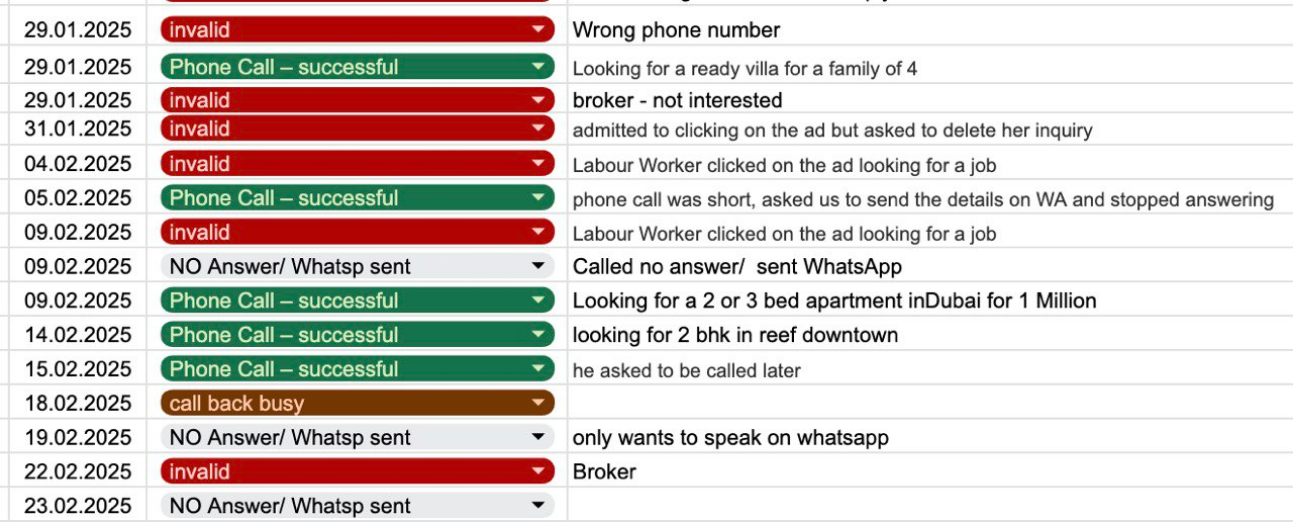 Lead qualification notes
Audience analysis
Instead of keeping the original targeting, we refined it with real data. The strongest settings clustered around people aged 30–65 interested in apartments and real estate investing — a more relevant audience that cuts wasted traffic and raises the share of genuine buyers.
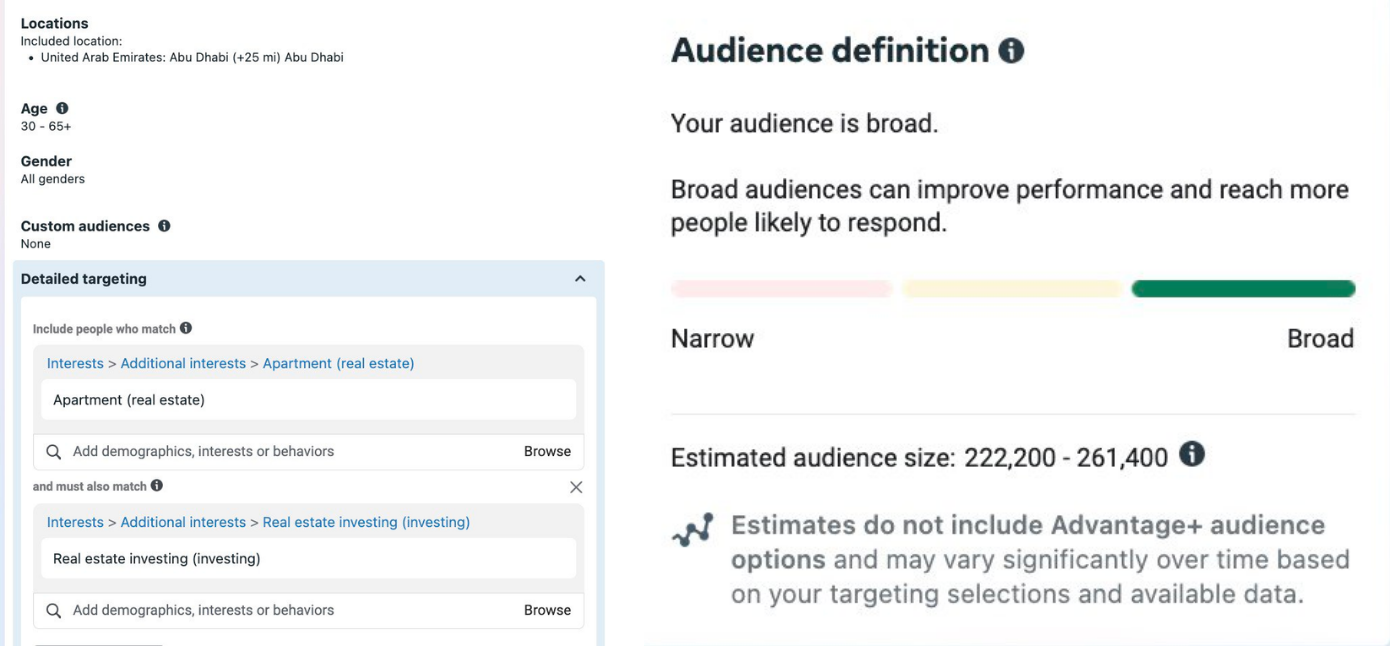 Audience analysis
Optimizing for lead quality, not just lead volume
Updated creatives
We rebuilt the teasers around the messages that had shown the most potential: fully furnished apartments, accessible starting prices and affordable purchase terms. A clearer, more specific value proposition let buyers grasp the key benefits before they ever submitted a request — launched together with the refined audience.
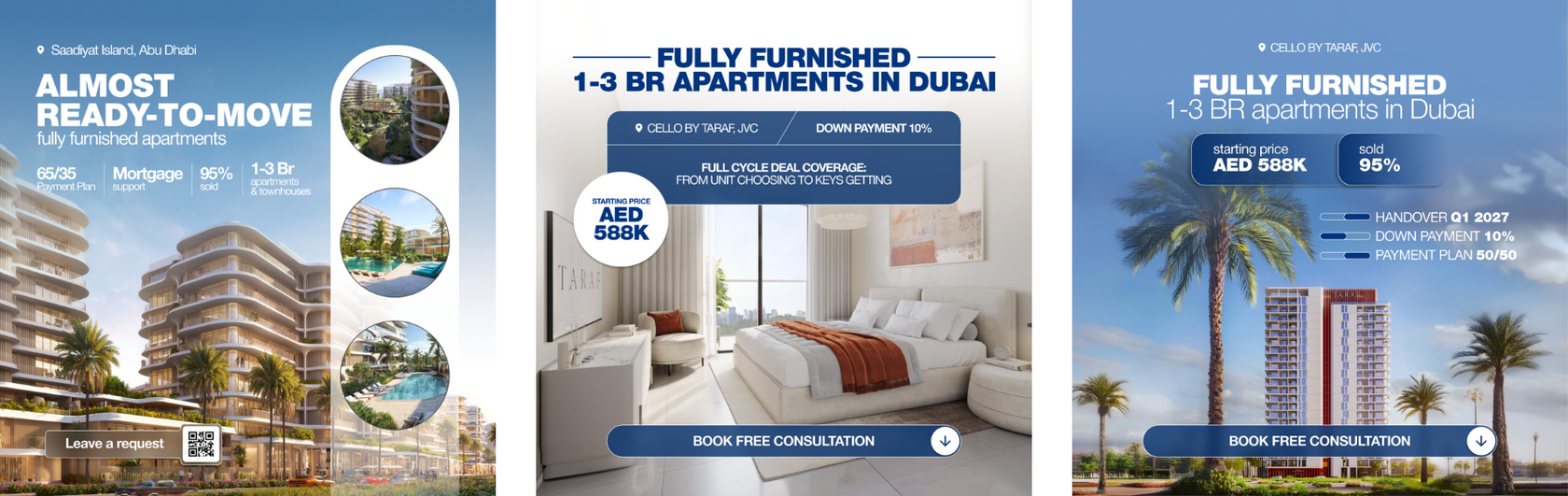 Updated teasers
Optimized campaign results
With new creatives and targeting live, performance moved in the right direction: 24 leads and an average cost per lead down from AED 168 to AED 117. We kept watching lead quality too — not just chasing a cheaper cost per result.
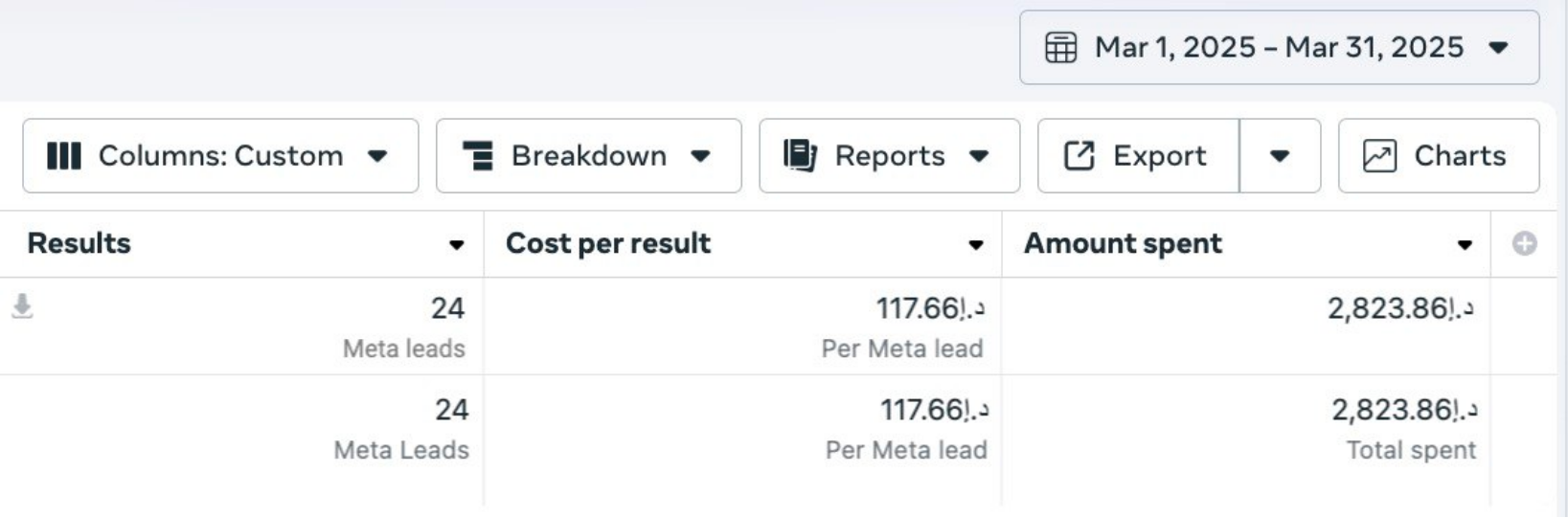 Optimized campaign
Qualification improvement
The qualification rate jumped from 33% to 57%, and two property viewings took place. Incoming requests now covered different property types with meaningful investment budgets — proof the campaign was getting closer to real sales goals.
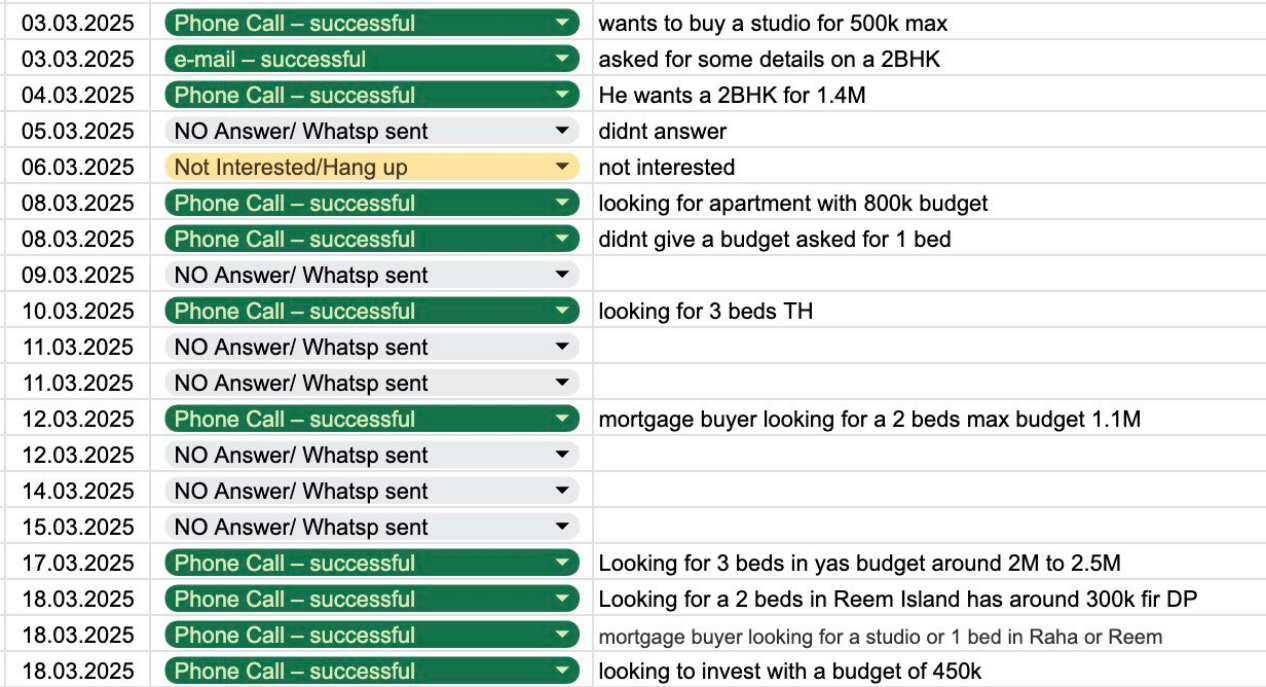 Qualification
Scaling toward higher-budget investors
Lookalike audience of Dubai investors
With quality under control, the goal became investors with budgets above AED 2M. Rather than relying on interests alone, we launched a lookalike campaign built on a database of Dubai investors — people already connected to the investment market, with stronger purchasing power.
Cheaper at scale, bigger budgets
The lookalike campaign raised volume while cutting costs: 79 leads at an average AED 50, with one campaign delivering 29 leads at just AED 39. Lead data also showed larger budgets — including prospects looking at properties in the AED 2–2.5M range.
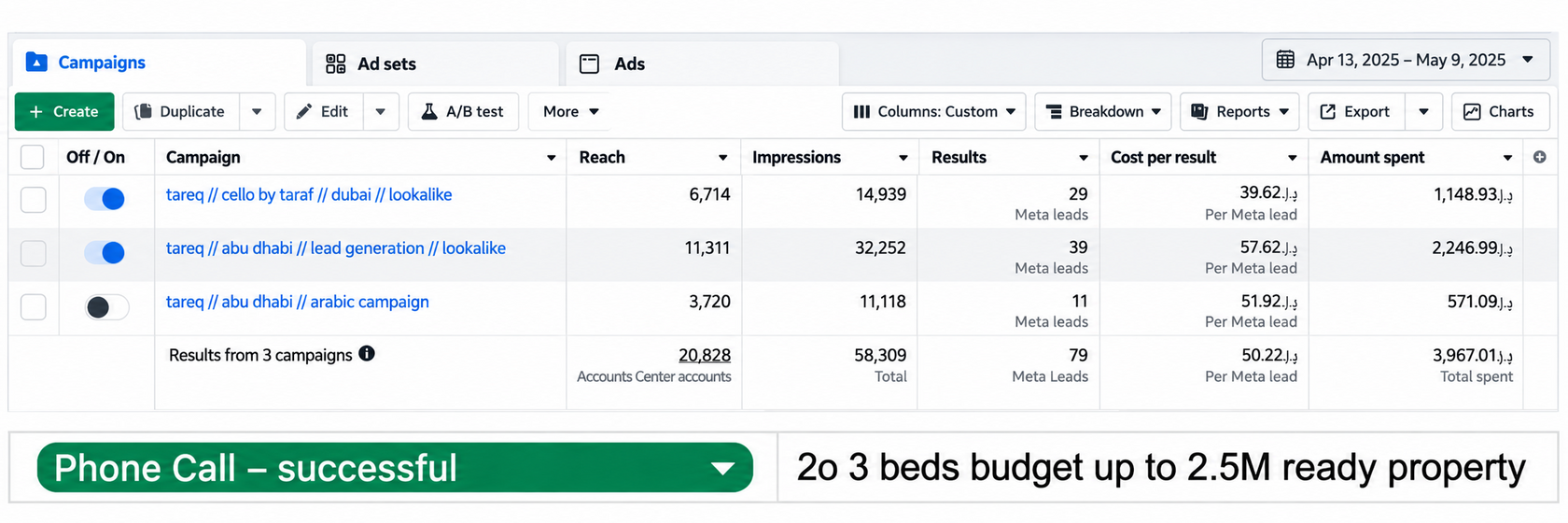 Lookalike campaign
Cheaper leads. Better leads.
Leads for every AED 1,000 of ad spend
Same budget, 4.3× more leads — as cost per lead fell from AED 168 to AED 39
Qualification rate
Before vs. after optimization
leads generated over 3 months of campaigns
qualified prospects interested in cooperation
qualification rate in the optimized stage
average cost per lead across the whole project
per lead in the best lookalike campaign · 29 leads
budgets among lookalike leads, plus 2 property viewings
Every stage made the next one smarter
We never locked in a single campaign setup. Each stage's results shaped the next: accessible projects first, then lead-quality analysis and a refined audience, then creatives built around the best offers — and finally a lookalike audience of Dubai investors to scale toward higher budgets.
Looking for similar results for your business in Dubai?
Get a free consultation →
Instagram Ads
Facebook Ads
Google Ads
TikTok Ads
LinkedIn Ads
Email Marketing
Yandex Direct
Complex marketing
All services
Digital Marketing
Website development
Advertising services in Dubai
Advertising services in Abu Dhabi
Social Media Marketing
Real estate
Real estate development marketing
Video production
B2B marketing
Personal branding
Restaurant marketing
Beauty marketing
Healthcare marketing
All Rights Reserved.


